

AML for Property Developers in Australia
Australia's Anti-Money Laundering and Counter-Terrorism Financing (AML/CTF) laws apply to certain activities, including specified real estate services. Since 1 July 2026, property developers may have direct AML/CTF obligations depending on how they sell or transfer real estate and whether they provide other designated services.
A developer selling property directly may be covered even if it does not operate as a real estate agency. The key question is whether your activities meet the definition of a designated service under the legislation.
One AML helps property developers assess their reporting entity status, understand their obligations and establish the compliance processes they need.
We’re proud to assist small to enterprise-scale businesses across all industry sectors.










Why AML/CTF Applies to Property Development
Property transactions can involve high-value payments, layered ownership structures, third-party funding and cross-border arrangements. These features can create opportunities for money laundering and make it harder to identify the people who ultimately own or control a property or business.
Australia's AML/CTF reforms extend obligations to certain real estate and professional services from 1 July 2026. However, identifying property development as a risk area does not mean every developer automatically becomes a reporting entity. The legal test depends on the designated services the business provides.
Are Property Developers Reporting Entities?
A property developer may be a reporting entity if it sells or transfers real estate in the course of carrying on a business selling real estate and the transaction is not brokered by an independent real estate agent. This can include direct sales of the developer's own stock, such as off-the-plan apartments and house-and-land packages.
Where an independent real estate agent brokers a sale, the developer does not provide that particular real estate designated service for that transaction. Using an agent does not, however, rule out obligations arising from other activities.
Other activities may also need to be assessed against the designated services in the AML/CTF Act. For example, certain services involving company or trust structures, or handling money or other property as part of a transaction, may be covered where the relevant legal definition is met. Simply holding purchaser deposits does not automatically make a developer a reporting entity.
Your business model, transaction arrangements and the role of any independent agent all matter. One AML can help assess your activities against the applicable requirements.
The obligations that apply to your practice depend on its designated services, risk profile and any relevant transitional arrangements.
What If Your Business Is Not a Reporting Entity?
Even if your development business is not itself a reporting entity, AML/CTF requirements may affect transactions through the agents and professional service providers you engage.
Customer Due Diligence by Service Providers
Real estate agents, lawyers, conveyancers and accountants may have AML/CTF obligations when providing specified designated services. Depending on the service and the customer relationship, they may need to verify identities, identify beneficial owners and understand the purpose of a transaction or business relationship.
If your development operates through companies, trusts or special-purpose vehicles, you may be asked to provide corporate records, trust documentation, ownership details and information about the source of funds.
Preparing relevant documents in advance can help reduce delays. However, the information requested will depend on the service provider's obligations and the circumstances of the transaction.
Transaction Reporting
Reporting entities may have to report certain physical currency transactions of AUD $10,000 or more to AUSTRAC, where threshold transaction reporting applies. This does not mean every property transaction valued at $10,000 or more is automatically reportable.
Suspicious Matter Reporting
A reporting entity must submit a suspicious matter report (SMR) when the applicable legal test is met. This generally involves reasonable grounds to suspect that information may be relevant to certain offences, investigations or proceedings. A report can be required regardless of the transaction value, and tipping-off restrictions may apply.
Property Development Risk Factors
Several factors may attract additional scrutiny during customer due diligence or when assessing transaction risk. These include complex ownership structures involving multiple companies, trusts or nominee arrangements, as these can make it harder to establish beneficial ownership. Third-party funding, particularly payments from unrelated parties or sources that do not align with a customer's known circumstances, may also require further enquiries.
Certain transaction types and arrangements may warrant closer examination depending on the circumstances. These include off-the-plan transactions involving deposits, extended settlement periods or changes in purchasing arrangements, as well as foreign investment and cross-border structures involving overseas entities, funding or links to higher-risk jurisdictions.
Unusual changes in transaction parties may also raise questions, including late changes to purchasing entities, contract assignments or unexplained changes in funding arrangements. These indicators do not, by themselves, establish wrongdoing. Their relevance depends on the wider context and the reporting entity's overall risk assessment.
AML/CTF Obligations for Property Developers
If your business provides a designated service under the AML/CTF Act, you must identify the obligations that apply and meet the relevant regulatory requirements. These may include AUSTRAC enrolment, developing and maintaining an AML/CTF program, and conducting a risk assessment that documents your business's ML/TF risks, policies, procedures and controls. Businesses that began providing newly regulated designated services from 1 July 2026 were required to enrol by 29 July 2026, while businesses starting to provide a covered service later generally need to enrol within 28 days of first providing it.
Customer due diligence is another key requirement, involving the identification and verification of customers and beneficial owners, risk assessments, and ongoing or enhanced checks where necessary. Reporting entities must also monitor relevant activity and submit Suspicious Matter Reports when the legal reporting test is met, alongside any other reporting requirements applicable to particular transactions. Businesses must maintain the required records, with retention periods depending on the record type. CDD and transaction records generally have seven-year retention periods, while AML/CTF program records follow their own retention requirements.
Reporting entities must also appoint an appropriately qualified AML/CTF Compliance Officer in accordance with applicable requirements and arrange independent evaluations at least once every three years, subject to relevant rules and transitional arrangements for the first evaluation. The exact obligations and commencement dates depend on the designated services provided and your business circumstances, so it is important to confirm your regulatory position rather than relying solely on general industry descriptions.
The Tranche 2 Reforms and Property Development
The AML/CTF reforms expanded the regime to cover certain real estate and professional services from 1 July 2026. This means some property developers have direct obligations when selling real estate, while other businesses may be affected through the regulated services they use.
Real estate agents are reporting entities when they provide relevant designated services. Lawyers, conveyancers and accountants are also covered when their activities meet the applicable designated service definitions, rather than simply because they work in those professions.
If your development business sells property directly or provides other potentially covered services, assess the relevant activities and any applicable enrolment and compliance requirements.
How One AML Helps Property Developers
One AML works with property developers at every stage of their AML/CTF compliance journey, whether that means confirming their reporting entity status, building a full AML/CTF program, or simply helping them prepare for the CDD process their service providers will apply.
Reporting Entity Determination
We assess your specific business activities against the designated services under the AML/CTF Act and give you a clear, accurate answer on whether you are a reporting entity and what obligations apply.
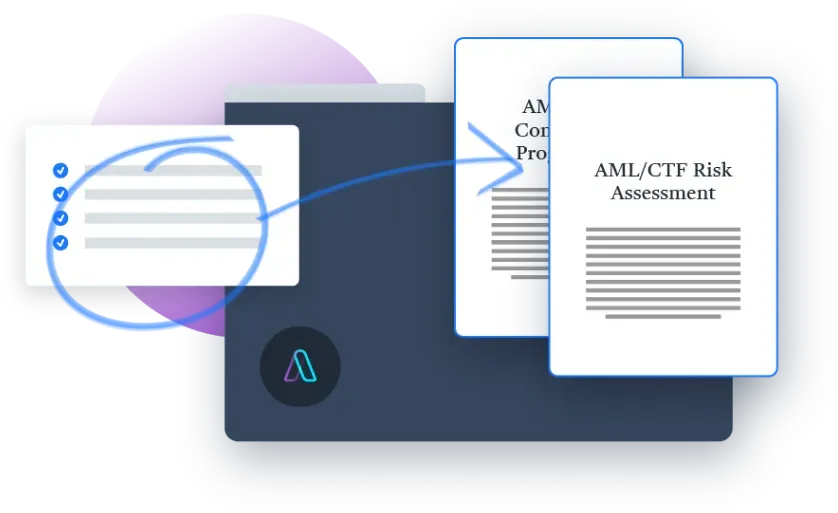
AML/CTF Program BuildIf you are a reporting entity, we build a tailored AML/CTF program including your ML/TF risk assessment, policies, procedures, and all required compliance documentation. Your program reflects the specific risk profile of property development activities, not a generic template.
CDD ReadinessWe help you prepare the beneficial ownership documentation, corporate structure information, and supporting materials your service providers will request when they conduct CDD on your business. Being prepared reduces delays in transactions and demonstrates compliance credibility to your professional services partners.
AUSTRAC Enrolment Support
If you are a reporting entity, we guide you through the AUSTRAC enrolment process and ensure your registration accurately reflects your designated services and business structure.
Ogoing Advisory and AMLCO Support
For reporting entities that need ongoing expert support, our AMLCO Support Services and Advisory packages keep your AML/CTF Compliance Officer supported and your program current as your business evolves.
Independent Evaluation
When your program is due for an independent evaluation, our Review and Premium Review packages provide a statutory independent evaluation with operational testing and a formal findings report.
Why Choose One AML?
One AML has assisted over 1,000 reporting entities across Australia and New Zealand with their AML/CTF obligations. Our team has experience with the activities-based nature of the Australian framework, including how it applies to property development business models.
Activities-based assessment of your reporting entity status
Tailored AML/CTF programs and risk assessments
Support for CDD readiness and beneficial ownership documentation
AUSTRAC enrolment guidance
Independent evaluation services
Ongoing advisory and AMLCO support
70+ verified Google reviews
We’re qualified to consult for all Phase 1 and 2 reporting entities across Australia.

Accounting

Financial Services

Law

Other Captured Sectors

Real Estate

Virtual Assets / Crypto
Check Your AML/CTF Obligations with One AML
If you develop or sell property in Australia, confirming your reporting entity status is an important first step. One AML can help assess your activities, clarify which obligations apply and identify the compliance support your business may need.
Ready to be free of your AML/CTF
compliance stress?

