

AML for Bookkeepers in Australia
Australia's Anti-Money Laundering and Counter-Terrorism Financing (AML/CTF) reforms, which commenced on 1 July 2026, expanded the regime to cover certain professional services. Bookkeeping practices may be affected if they provide designated services with an Australian geographical link.
However, not every bookkeeping activity creates AML/CTF obligations. The relevant test is the service your practice provides, rather than your job title or business category.
One AML helps bookkeeping practices assess whether they fall within the regime, identify their obligations and develop an AML/CTF program suited to their services and risk profile.
We’re proud to assist small to enterprise-scale businesses across all industry sectors.











Do AML/CTF Laws Apply to Bookkeepers?
Not all bookkeepers are automatically covered by Australia's AML/CTF laws. Your practice may be a reporting entity if it provides a designated service that falls within the scope of the legislation and has the required Australian geographical link.
Depending on the services offered, relevant activities may include:
- Company and legal arrangement services: Forming or arranging the formation of a body corporate or legal arrangement for a client.
- Registered office and business address services: Providing certain registered office, business address or related services for a company or legal arrangement.
- Nominee services: Acting, or arranging for another person to act, as a nominee director or shareholder in circumstances covered by the legislation.
- Client money and asset-related services: Providing specified services involving the planning or execution of transactions to sell, buy or transfer a body corporate or legal arrangement, where the service meets a designated service definition.
These examples are not an exhaustive list, and the precise legal definition of each service matters.
Ordinary bookkeeping, Business Activity Statement (BAS) preparation and payroll processing do not automatically bring a practice within the regime. However, some activities associated with these services may require closer assessment under AUSTRAC's guidance for bookkeeping and payroll services.
If you are unsure whether your work falls within a designated service, assess your actual activities, client arrangements and responsibilities before deciding whether you need to enrol.
What Changed on 1 July 2026?
The AML/CTF reforms extended Australia's existing framework to certain higher-risk professional services. Bookkeepers who provide covered designated services may now have obligations in addition to their existing business and professional responsibilities.
Depending on the services provided, these obligations may include:
- Enrolling with the Australian Transaction Reports and Analysis Centre (AUSTRAC).
- Developing and maintaining an AML/CTF program and risk assessment.
- Conducting customer due diligence (CDD).
- Maintaining required AML/CTF records.
- Appointing an AML/CTF compliance officer.
- Submitting suspicious matter reports when the legal reporting test is met.
- Arranging independent evaluations and other reviews as required.
The obligations that apply to your practice depend on its designated services, risk profile and any relevant transitional arrangements.
Key AML/CTF Obligations for Bookkeepers
If your bookkeeping practice provides a designated service, you need to identify and meet the requirements that apply to that service. Key obligations may include the following.
AUSTRAC Enrolment
Businesses providing designated services with an Australian geographical link generally need to enrol with AUSTRAC. Enrolment opened on 31 March 2026. Businesses providing newly regulated designated services from 1 July 2026 were required to enrol by 29 July 2026. If your practice begins providing a covered designated service later, you must generally enrol within 28 days of first providing that service.
If you believe your practice was required to enrol but has not done so, assess your circumstances and address any outstanding requirements promptly. Enrolment is different from registration. Registration is an additional requirement for certain sectors, including remittance service providers and virtual asset service providers. It is not a general registration requirement for bookkeepers.
AML/CTF Program and Risk Assessment
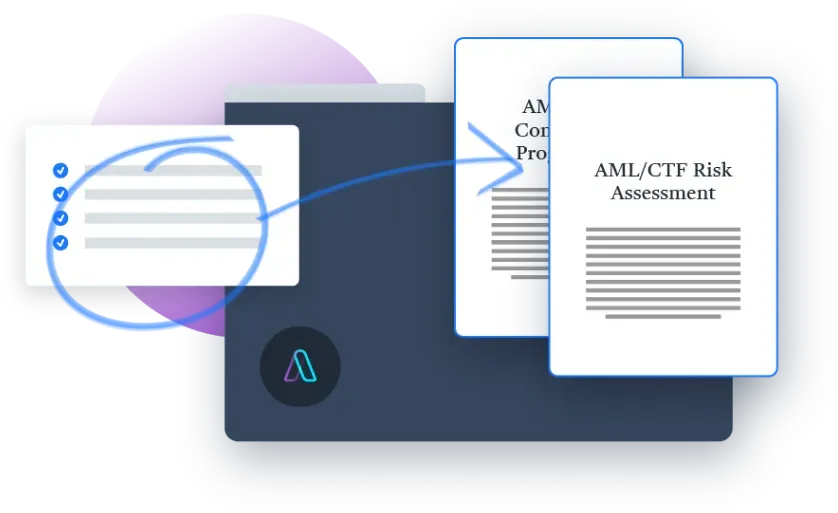
Reporting entities must develop and maintain an AML/CTF program appropriate to their business and the risks associated with the designated services they provide. Your risk assessment should identify how your practice could be exposed to money laundering, terrorism financing and proliferation financing risks. It should consider relevant factors such as your services, customer types, delivery channels and geographic exposure.
Your program should document how you will manage and mitigate those risks, including the policies, procedures and controls needed to meet your obligations.
Customer Due Diligence
Customer due diligence involves collecting and assessing information about customers to help identify and manage relevant risks. Depending on the applicable requirements, this may include:
Identifying and verifying customers.
Identifying beneficial owners where required.
Assessing customer risk.
Conducting additional checks for higher-risk customers.
Screening for relevant politically exposed persons and sanctions-related risks.
Conducting ongoing customer due diligence where required.
The timing and extent of these checks depend on the applicable rules, the service being provided and any relevant transitional arrangements.
Suspicious Matter Reporting and Record Keeping
Reporting entities must submit a suspicious matter report (SMR) to AUSTRAC when the legal reporting test is met. This generally involves forming a suspicion on reasonable grounds that a matter may be relevant to certain offences, investigations or proceedings. There is no general monetary threshold that must be reached before an SMR is required.
SMRs are generally due within three business days after the day the suspicion is formed. Where the suspicion relates to terrorism financing, the reporting deadline is generally 24 hours. Specific circumstances and applicable rules should be checked when determining the deadline.You must also protect the confidentiality of suspicious matter reporting and comply with applicable restrictions on tipping off customers.
AML/CTF Compliance Officer and Staff Training
Your AML/CTF program must provide for an appropriately appointed AML/CTF compliance officer in accordance with the applicable requirements. The officer is responsible for overseeing relevant compliance activities and supporting the implementation of your program.
Staff who perform relevant duties should receive appropriate training so they understand the risks, internal procedures, reporting processes and responsibilities associated with their roles.
Independent Evaluation
Your AML/CTF program must be independently evaluated at least once every three years, with the frequency set out in your AML/CTF policies and appropriate to the nature, size and complexity of your business. Transitional arrangements affect the deadline for the first independent evaluation for newly regulated businesses.
Your first evaluation may therefore be due on a different timetable from the usual three-year minimum. Internal reviews may also be required in certain circumstances. Your practice should establish its applicable deadline, document its evaluation schedule and address any issues identified through the evaluation.
How One AML Helps Bookkeeping Practices
Determining whether your practice is covered is the first step. If you provide a designated service, you also need to understand the obligations that apply and establish appropriate processes to meet them.
One AML can help your practice assess its position and prepare for ongoing compliance.
Obligation Assessment and AUSTRAC Enrolment
One AML can help you review your services against the designated service definitions, identify potential AML/CTF obligations and understand the enrolment requirements relevant to your circumstances.
If your practice is covered, support can also help you understand the steps involved in enrolling with AUSTRAC.
AML/CTF Program and Risk Assessment
One AML can help develop an AML/CTF program and risk assessment tailored to your practice. This includes documenting relevant risks, establishing controls and setting out the procedures needed to manage your obligations.
Registers, Record Keeping and Staff Training
Your compliance processes need to be documented and maintained. One AML can assist with relevant registers, record-keeping processes and staff training resources to support your program.
AML/CTF Compliance Officer Support and Independent Evaluation
One AML can help your practice understand the responsibilities associated with the AML/CTF compliance officer role and the requirements for independent evaluation. The support you need will depend on your services, internal resources and existing compliance arrangements.
If you are unsure where to start, One AML can help you identify the next steps for your practice.
Why Choose One AML?
One AML supports businesses across Australia and New Zealand with AML/CTF compliance, helping reporting entities understand their regulatory obligations and establish processes suited to their operations. This includes assessing whether their services fall within the AML/CTF regime and identifying the requirements that apply.
Its services cover AML/CTF program development, risk assessments, compliance documentation and registers, staff training resources, compliance officer support and independent evaluation services. These services are designed to help businesses establish appropriate compliance arrangements and manage their ongoing responsibilities.
With experience supporting more than 1,000 reporting entities across Australia and New Zealand and over 70 verified Google reviews, One AML brings established industry experience. The right support depends on your practice's circumstances, so start by confirming whether your services are covered and identifying the obligations that follow.
We’re qualified to consult for all Phase 1 and 2 reporting entities across Australia.

Accounting

Financial Services

Law

Other Captured Sectors

Real Estate

Virtual Assets / Crypto
Check Your AML/CTF Obligations with One AML
If you operate a bookkeeping practice, the first step is to establish whether the services you provide fall within the AML/CTF regime. If they do, One AML can help you assess your obligations and develop a compliance approach suited to your business.
Ready to be free of your AML/CTF
compliance stress?

